
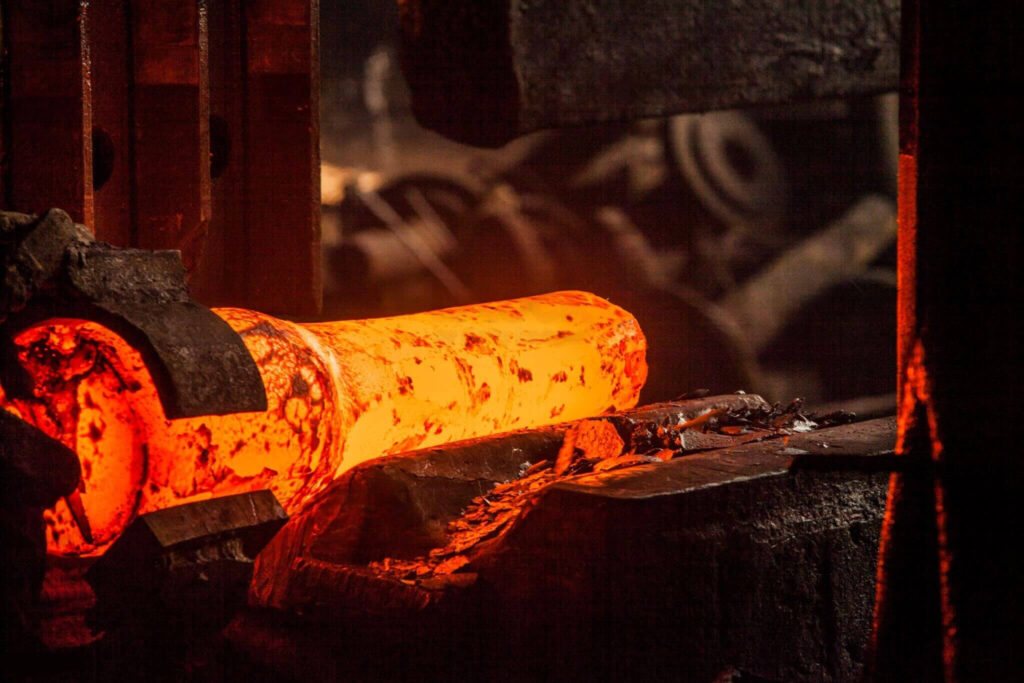
Renine Metalloys LLP. offers a variety of value added services to accompany its core business as a major Bright Bar, Round Bar And Black Bar & other allied products stockholder. These services are designed to offer you a more complete service.
Size Range : 25.4mm to 2400 mm.
Services Offered
- Cutting (in-House)
- Turning
- Peeling
- Grinding
- Boring
- Heat Treatment
- Testing
- Machining
ANODISING
The process is called anodizing because the part to be treated forms the anode electrode of an electrical circuit.
BENDING
Bending is a manufacturing process that produces a V-shape, U-shape, or channel shape along a straight axis in ductile materials .
ANNEALED
Annealing, in metallurgy and materials science, is a heat treatment that alters the physical and sometimes.
CENTRELESS
Center less grinding is a machining process that uses abrasive cutting to remove material from a work piece.
CUTTING
cutting is a process that is used to cut steel & other metals of different thicknesses using a plasma torch.
CUSTOMIZATION
Innovative design always develops in tandem with innovative technology, and can never be an end in itself.
COATING
A coating is a covering that is applied to the surface of an object, usually referred to as the substrate.
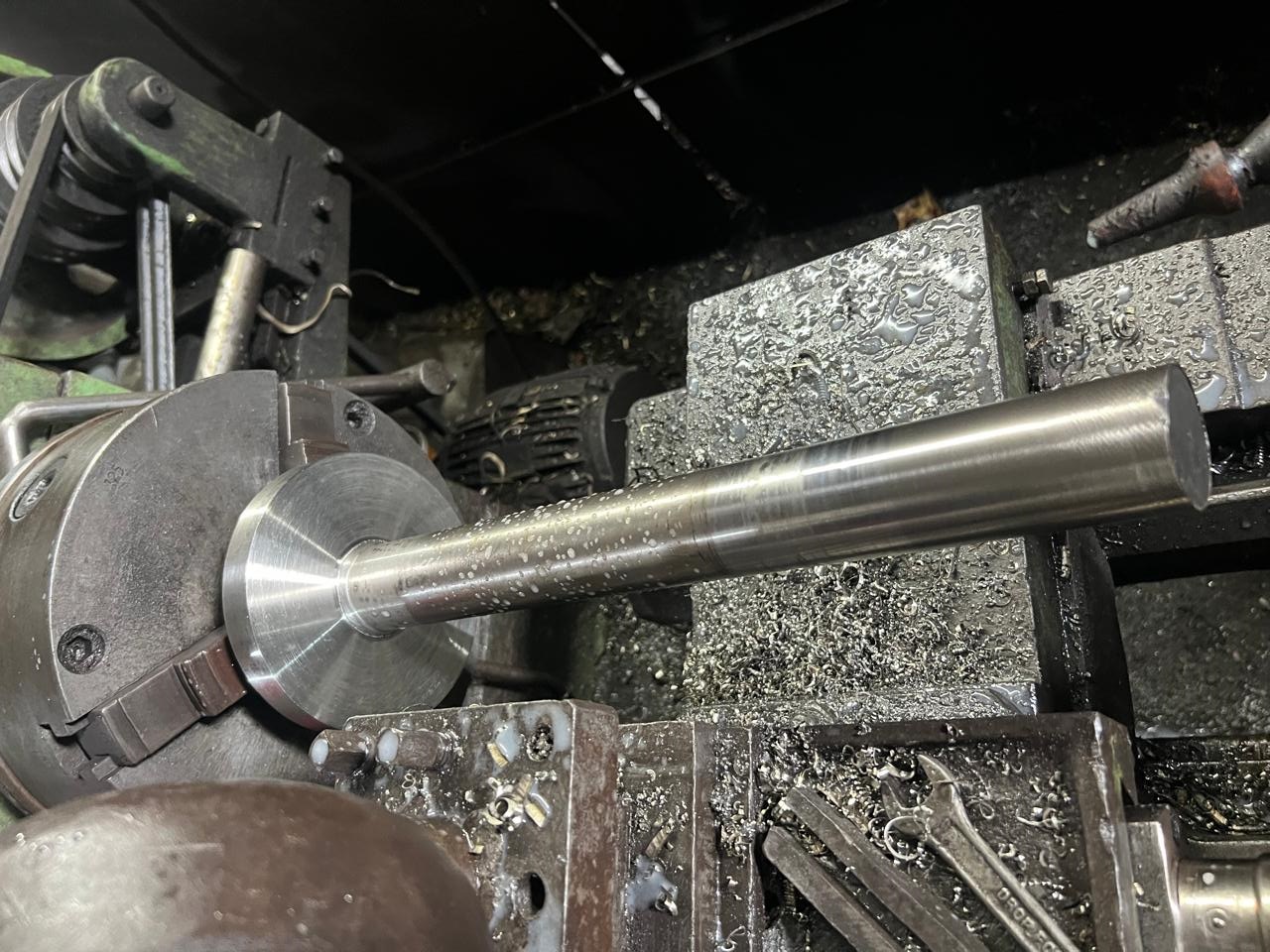
Raw Material
In the initial stage of production, the system performs quality checks on the supplied raw materials by verifying test certificates, as well as conducting visual and dimensional inspections. The stainless steel flanges produced are of superior quality, ensuring excellent durability, strength, and resistance to challenging environmental conditions.
Material Inspection
Incoming Quality Control (IQC) is the process of evaluating the quality of materials and components before they enter production. Through incoming inspections, it is possible to verify chemical composition and ensure quality standards are met even before conducting first article inspections or in-process inspections.
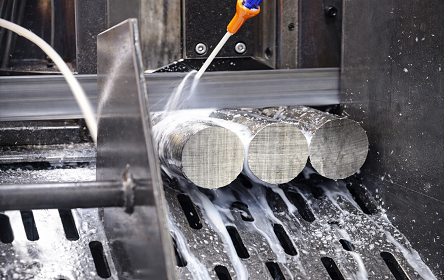
Material Cutting
This process involves manufacturing flanges by cutting strips from a steel plate and rolling them into a circular shape. After rolling, the edges are welded and the ring is compressed to achieve the final form. The flange then undergoes additional finishing processes, including applying a serrated spiral finish and drilling bolt holes. Throughout the process, we perform weight measurement, inspect cut surfaces, and apply marking to ensure quality and traceability.
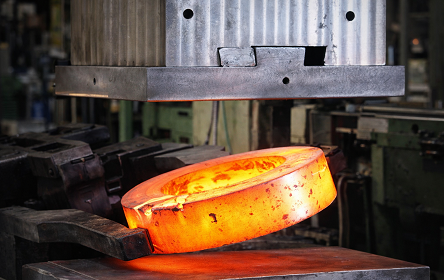
Flange Forging
Forged flanges typically have lower carbon content than cast flanges, making them less prone to rust. During the forging process, we conduct material grade checks, measure weight, and carefully control the forging temperature. Forged flanges also benefit from a uniform internal structure and are free from defects such as cavities or porosity that can occur in castings.
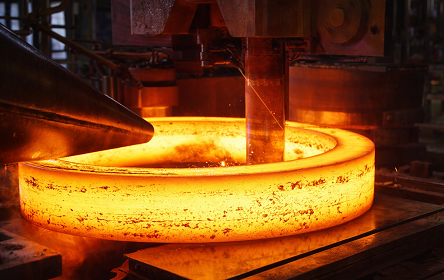
Heat Treatment
During heat treatment, the cooling rate varies depending on the process: annealing involves the slowest cooling, normalizing uses a faster cooling rate, and quenching requires the quickest cooling. Flanges remain connected and move continuously through each stage of the process. This stage also includes solution treatment and mechanical testing to ensure the desired material properties and performance.
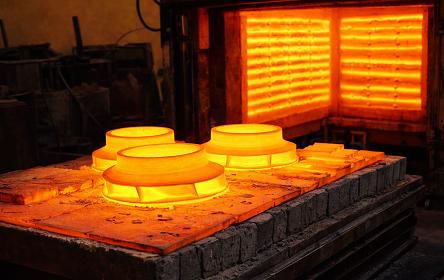
Forging Rolling
Roll forging is a metal shaping process that uses opposing rolls to deform and shape a workpiece. Although it involves rolls, it is classified primarily as a forging process rather than a traditional rolling process because it focuses on localized deformation. The forged contours used to shape the parts are present only along specific sections of the roll edges.
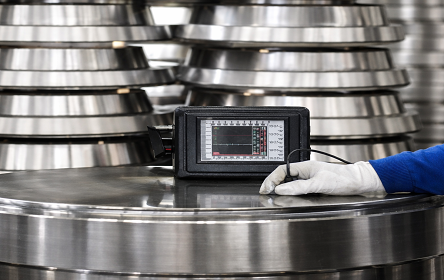
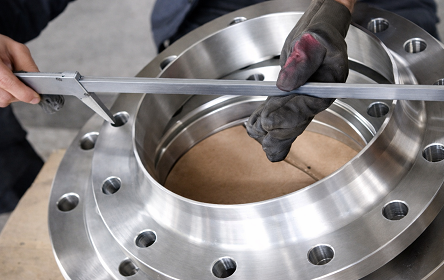
Final Inspection
In this method, the dimensions and sizes of the flanges are carefully measured and inspected. The internal diameter is checked to ensure compatibility with the corresponding pipe size, as it determines the proper fit. In addition to dimensional inspection, we also perform visual examinations and nondestructive testing to further ensure the quality and integrity of the flanges.
Rust Prevention
Standard rust prevention treatments for stainless steel flanges include yellow (golden) paint coating, black paint coating or black phosphating, varnish coating, electro-galvanizing (cold galvanizing), varnish with anti-rust oil, and hot-dip galvanizing. Additionally, each flange is marked for identification and traceability.
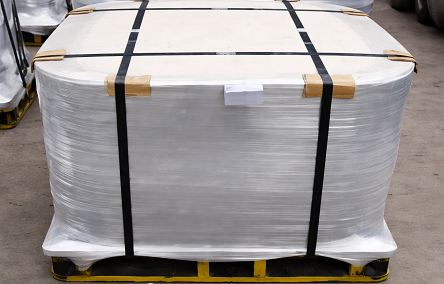
Well Packing
Steel flanges must be packed using seaworthy methods before delivery to clients. Typical packing options include wooden boxes, iron or steel cages, wooden pallets, and iron or steel pallets. Since standard wooden boxes and pallets require fumigation, we generally use plywood cases, boxes, or pallets instead, which do not require fumigation treatment and are suitable for exporting stainless steel flanges.
EN 10204 Type 3.2 Certification

Renine Metalloys LLP offers third-party verification of non-class materials to standards other than the Renine Metalloys LLP Rules. In performing third-party material verifications, Renine Metalloys LLP is governed by EN 10204:2006 and ISO 10474:2013 standards.
Type 3.2 certification involves visits to the client facility by the third-party surveyor for visual examination, sample dimensional checks, confirmation that materials are traceable back to their ladle chemical analysis and validation that their properties meet material specification requirements. The surveyor would also visit the appropriate metallurgical lab to witness appropriate mechanical tests.
An Renine Metalloys LLP surveyor will visit the metallurgical lab to witness all additional testing of the material necessary to confirm compliance with the specification. If all of the above meet the requirements, the Renine Metalloys LLP surveyor will carry out a final visit to the intermediate material handler to review documentation, verify that the material meets the product specification and the customer’s purchase order requirements and issue the Survey Report.
Restrictions For Use
Renine Metalloys LLP will not attend for 3.2 material verification when the end use is for Nuclear or Aerospace industries. Type 3.2 certificates do not constitute compliance with Renine Metalloys LLP Rules. Materials holding an Renine Metalloys LLP 3.2 certificate are not suitable for use on Renine Metalloys LLP-classed vessels.